
Can a Dirty Filter Really Cause HVAC Problems?
It is the single most common piece of advice in the HVAC world: “change your air filter.” For many homeowners, this seems like a trivial, low-priority task. It is a simple, inexpensive piece of cardboard and mesh. It is hard to believe that this one component could truly be the cause of a catastrophic, multi thousand dollar heating and cooling failure. This skepticism, however, is one of the most frequent and costly mistakes a homeowner can make. The truth is that a dirty air filter is not just a minor issue; it is the root cause, the “patient zero,” for a cascade of the most common and most expensive HVAC problems. Your entire system, from its complex motors to its delicate coils, is completely dependent on one thing: the free and easy movement of air. A clogged filter starves your system of that air, and the consequences can be devastating.
What Your Air Filter Is Actually For
Before understanding the problems, it is critical to understand the filter’s true purpose. Most people believe the filter is there to clean the air they breathe. While this is a very important secondary benefit, it is not the filter’s primary job. The air filter’s main function is to protect your HVAC equipment. Your furnace and air conditioner are the most expensive and complex appliances in your home, and their internal components are surprisingly delicate.
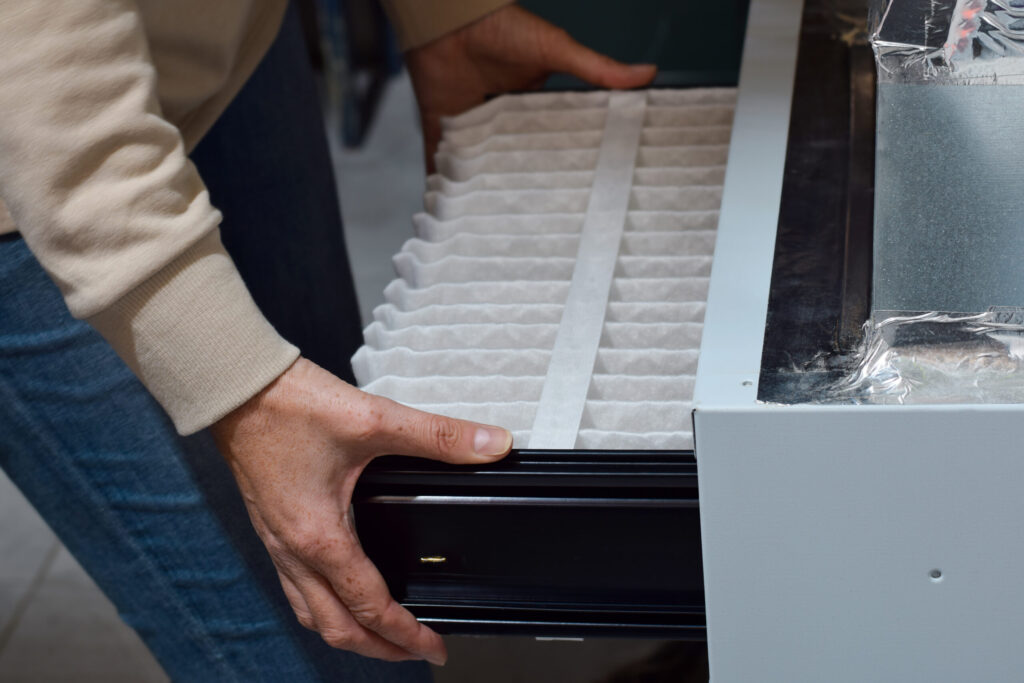
Inside your central air handler or furnace is a powerful blower motor. This fan pulls massive volumes of air from your home through the return ducts, forces that air through the filter, and then pushes it across either the furnace’s heat exchanger or the air conditioner’s evaporator coil to be conditioned. Finally, it blows that treated air back into your home through the supply vents. Without a filter, this process would pull all the dust, pet dander, lint, and hair from your home directly into that sensitive machinery. This debris would coat the blower motor, clog the fins of the coils, and grind on moving parts, leading to a swift and certain breakdown. The filter is the guard, protecting your investment.
The Science of a Clog: Restricted Airflow
All the problems we are about to discuss stem from one single issue: restricted airflow. Your HVAC system is a precisely engineered, closed-loop system. It is designed by engineers to move a specific volume of air, measured in cubic feet per minute (CFM), to operate efficiently and safely. A clean filter allows for this exact amount of airflow. As the filter does its job and traps particles, those particles begin to build up. Over time, this layer of grime and dust becomes a thick, dense mat. The filter becomes “clogged,” and the system can no longer pull the required amount of air through it.
Need a furnace tune up? Click here for our furnace maintenance service.
This is the moment the problems begin. The blower motor is still trying to pull the same amount of air, but it cannot. This creates a massive strain on the entire system. It is the equivalent of forcing an athlete to run a marathon while breathing through a narrow straw. The system will try to compensate, but it will be working harder, running longer, and operating far outside of its designed safety parameters. This is not a sustainable situation, and it is only a matter of time before a component fails.
How a Dirty Filter Destroys Your Air Conditioner
The most dramatic and common failure caused by a dirty filter happens during our hot Clarksville summers. Your air conditioner does not create “cold” air; it removes heat. It does this by circulating cold refrigerant through the indoor evaporator coil. The blower pulls the warm, humid air from your home and forces it over these cold coils. The heat from the air transfers to the refrigerant, and the cold, dehumidified air is then blown back into your house.
This process relies entirely on a constant flow of warm air. When a dirty filter blocks that airflow, the evaporator coil cannot absorb enough heat. The refrigerant, however, remains just as cold. This causes the temperature of the coil to drop below 32 degrees. The moisture that normally condsenses on the coil and drips away as water now freezes in place. This ice begins to spread, layer by layer, until the entire evaporator coil is encased in a solid block of ice.
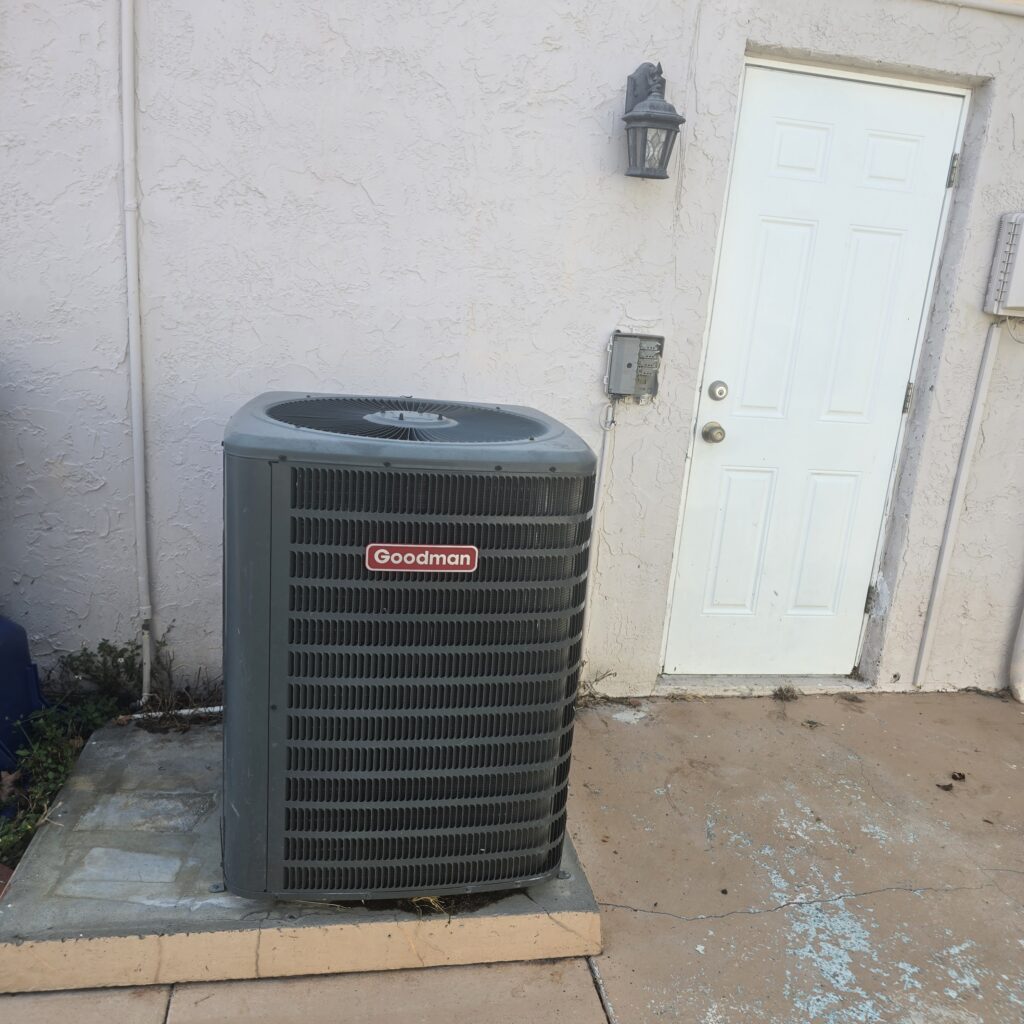
When this happens, your air conditioner will stop cooling completely. Air cannot pass through the ice, and the system is effectively useless. You may notice the system is blowing warm or barely any air at all. If you look at the indoor unit, you may see ice or dripping water. At this point, you have a serious problem. Running the system in this state can put catastrophic pressure on the outdoor compressor, the single most expensive component in your AC. What started as a ten dollar filter problem can easily become a five thousand dollar compressor replacement.
How a Dirty Filter Kills Your Furnace
The danger is just as real during the winter. Your furnace, whether it is gas or electric, generates a massive amount of heat in a very small area, specifically the heat exchanger. The furnace relies on the blower motor to pull in cool household air and pass it over the heat exchanger, absorbing that intense heat and distributing it safely throughout your home. This constant airflow is the only thing that keeps the heat exchanger from getting too hot.
When a dirty filter restricts that airflow, the furnace is suffocated. It can no longer get rid of the heat it is creating. The temperature inside the furnace’s cabinet begins to rise rapidly. This is an extremely dangerous situation. Fortunately, every modern furnace is equipped with a safety sensor called a “limit switch.” When this switch detects that the furnace is overheating, it immediately shuts the system down to prevent a fire.
Furnace isn’t heating properly? Click here for reasons why.
This is what homeowners experience as “short cycling.” You will hear the furnace turn on, run for just a few minutes, then abruptly shut off before the house is warm. After a few minutes, it will try again, only to overheat and shut down. This process puts immense stress on every component. But the greatest danger is to the heat exchanger itself. This repeated, intense overheating can cause the metal of the heat exchanger to crack. A cracked heat exchanger is not a repairable problem; it is a deadly one. It can allow carbon monoxide, an odorless, invisible, and lethal gas, to leak from the furnace and be distributed into your home. This is not a theoretical risk; it is a primary reason why annual furnace maintenance is so critical.
The Strain on Your Blower Motor
Throughout both of these scenarios, the blower motor is the component taking the most direct and constant abuse. This motor is the heart of your HVAC system, responsible for moving all the air. When the filter is clogged, the motor is fighting against incredible resistance. This strain, known as high static pressure, forces the motor to work much harder. It draws more electricity and generates more heat, which can cause the motor to overheat and burn out. A blower motor replacement is an expensive repair, often costing many hundreds of dollars. It is a failure that is almost always preventable.
The Impact on Your Wallet and Comfort
Even before your system fails completely, a dirty filter is costing you money. The U.S. Department of Energy estimates that a clogged filter can increase your system’s energy consumption by 5 to 15 percent. Because the system is strained, it must run for much longer cycles to reach the temperature set on your thermostat. Longer run times mean higher gas and electric bills every single month. You are paying more money for less comfort.
This reduced airflow also leads to one of the most common homeowner complaints: uneven temperatures. Rooms that are farther away from the central unit, such as upstairs bedrooms, will not get enough conditioned air. This creates hot and cold spots throughout the house. You may find yourself constantly adjusting the thermostat, but the problem is not with the furnace; it is with a lack of airflow.
The Impact on Your Home’s Health
Finally, a dirty filter fails at its secondary job: cleaning your air. When a filter becomes saturated, it can no longer trap new particles. In fact, the force of the air trying to get through can begin to dislodge trapped particles, pushing them into your ductwork and back into your home. This means more dust, pollen, and pet dander are constantly circulating in the air you breathe, which can be a major problem for family members with allergies or asthma. Even worse, a filter that has become damp from a freezing coil can become a breeding ground for mold and bacteria, which are then distributed throughout your entire home.
So, can a dirty air filter really cause HVAC problems? The answer is an emphatic yes. It is not just a problem; it is the problem. A dirty filter is the single, simple, and preventable trigger for a catastrophic chain reaction that can lead to a frozen air conditioner, an overheated furnace, a burnt out blower motor, high energy bills, and poor indoor air quality.
This simple, inexpensive maintenance task is the most important thing you can do as a homeowner to protect your HVAC system. At Barney’s Heating and Air, we have seen the expensive consequences of this small oversight countless times in Clarksville. If you are unsure how to change your filter, what kind to buy, or if you suspect a dirty filter has already caused a problem with your system, our team is here to help. A professional maintenance check can clean your system and ensure it is ready to run safely and efficiently, all year long.