
Is Your Furnace Making Strange Noises? Here’s What It Means
Your furnace is usually a quiet companion in your home. It hums along in the background, providing the warmth your family relies on during the cold Clarksville winters. Most homeowners stop noticing the sound of their heating system after a while because it becomes just another part of the house’s ambient noise. However, that familiarity makes it even more noticeable when something changes. You might be sitting in your living room reading a book when you hear a sudden loud bang from the attic or a high pitched squeal that sets your teeth on edge. These noises are not just annoyances. They are your furnace’s way of communicating that something is wrong.
Ignoring these auditory warning signs is a common mistake that can lead to significant consequences. A small rattle today could turn into a catastrophic component failure tomorrow if left unaddressed. More importantly, some noises indicate dangerous safety hazards that could put your family at risk. Understanding the language of your furnace is the first step in protecting your home and your wallet. While you should never attempt to repair complex HVAC machinery yourself, knowing what these sounds mean can help you decide when to shut the system off and call a professional.
The High Pitched Squeal or Screech
One of the most alarming sounds a furnace can make is a loud, piercing squeal. This noise often starts the moment the furnace kicks on and may persist the entire time the system is running. It is a sound that is impossible to ignore, and for good reason. In older furnaces, this is almost always a sign of a slipping or worn out blower belt. Just like the belt in a car engine, the belt in your furnace is made of rubber that can dry out, crack, and stretch over time. When it loses its grip, it slips against the metal pulley, creating that distinctive screeching sound. If the belt snaps completely, the blower fan will stop turning, the furnace will overheat, and the system will shut down.

In modern furnaces, which often do not use belts, a squealing noise points to a different problem. It usually indicates that the bearings in the blower motor or the inducer motor are failing. These metal bearings allow the motor shafts to spin freely at high speeds. Over years of operation, the lubricating grease inside them can dry out. Without lubrication, the metal parts create intense friction, resulting in a high pitched squeal. This is not a problem that will go away on its own. If the bearings are allowed to seize up completely, they can destroy the motor, turning a relatively simple repair into a major expense.
A Loud Bang or Boom Upon Startup
Few things are as frightening as hearing a loud boom coming from your utility closet or attic when the heat turns on. This sound can shake the house and sounds remarkably like a small explosion. The reality is that it effectively is a small explosion, and it is a serious safety concern. This noise is most commonly caused by a phenomenon known as delayed ignition.
In a properly functioning furnace, the gas valve opens, and the burners ignite almost instantly. However, if the burners are dirty or clogged with carbon buildup, the gas cannot ignite immediately. Instead, the gas continues to flow into the combustion chamber, building up in volume. When the ignition source finally reaches this cloud of accumulated gas, it all ignites at once with a forceful burst. This mini explosion creates the loud banging sound you hear. Over time, these repeated concussions can crack the heat exchanger, which is the heart of your furnace. A cracked heat exchanger is a critical failure that can allow deadly carbon monoxide gas to leak into your living spaces. If you hear this noise, you must turn your system off and call for professional service immediately.
Need furnace repair? Click here for our furnace repair service.
There is a less dangerous version of a banging sound that comes from your ductwork. As the metal ducts heat up, they expand. When the system shuts off and they cool down, they contract. In some homes, the metal sheets can pop in and out, similar to the sound of a baking sheet warping in a hot oven. This is often referred to as “oil canning.” While this is annoying, it is generally not dangerous. However, it can indicate that your ductwork is undersized or that you have a closed vent creating too much pressure in the system.
Persistent Clicking Sounds
You expect to hear a click or two when your thermostat first calls for heat. This is the sound of the electrical relays engaging and the ignition system starting its sequence. However, if you hear a rapid, repetitive clicking that goes on and on, or clicking that happens when the furnace should be running smoothly, you have a problem.
This sound is most often associated with the ignition system. If you have a furnace with a spark igniter, it works much like a gas grill. The clicking is the sound of the igniter trying to create a spark to light the burners. If the burners fail to light, the system will keep trying for a few seconds before entering a safety lockout. This failure can be caused by a bad gas valve, a faulty igniter, or even a problem with the gas supply itself.
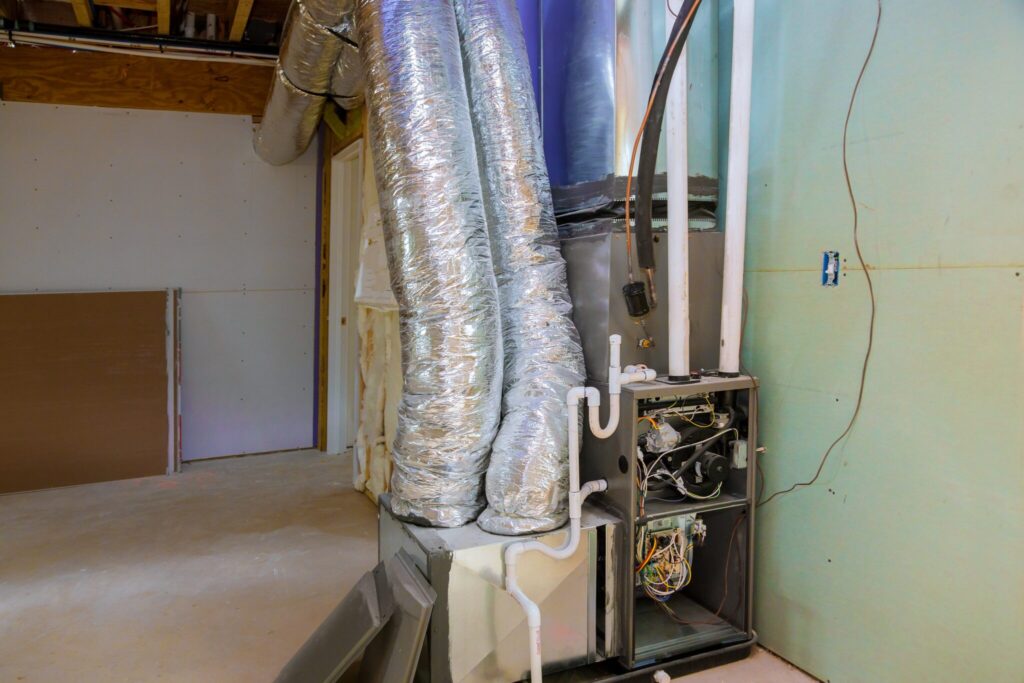
Another common culprit is the flame sensor. This is a small safety rod that sits in the path of the burner flame. Its only job is to confirm that a fire is actually burning. If the sensor gets dirty or coated in carbon, it cannot detect the flame. The computer in the furnace will think the fire has gone out and will shut the gas off to prevent a leak. The system may try to relight itself several times, resulting in a cycle of clicking, a brief “whoosh” of flame, and then a shutdown. Routine maintenance usually prevents this issue, as cleaning the flame sensor is a standard part of a tune up.
The Sound of Metal Grinding or Scraping
A grinding noise is exactly what it sounds like: metal parts rubbing against other metal parts. This is a mechanical sound that indicates severe physical damage is occurring inside your furnace. Unlike a squeal or a rattle, a grinding sound usually means a major component is in the process of destroying itself.
The most likely source is the blower wheel. This is the large, cylindrical fan that moves air through your home. It is attached to the motor shaft with a set screw or a mount. If that mount comes loose, the heavy metal wheel can slide out of alignment and scrape against the metal housing of the blower cabinet. This creates a loud, jarring scraping noise that will echo through your ductwork. If the wheel breaks apart while spinning at high speed, it can cause extensive damage to the motor and the cabinet.
Another cause is a totally worn out motor bearing. As we discussed with squealing noises, bearings eventually fail. When they go past the point of squealing, they can disintegrate, causing the motor shaft to wobble and grind against the housing. If you hear a grinding noise, you should turn your furnace off immediately. Continuing to run the system will almost certainly result in a much more expensive repair bill, as you will likely damage parts that were not originally broken.
Rattling and Vibration
Rattling noises can be deceptive because they range from very minor issues to very serious ones. On the benign end of the spectrum, a rattle might simply be a loose screw on an access panel. Over years of operation, the slight vibration of the furnace can cause fasteners to back out, leaving a metal cover to rattle against the frame. This is easily fixed by a technician with a screwdriver.

However, a rattle that comes from deep inside the furnace can point to a cracked heat exchanger. As the metal heats up, the crack can expand and cause the broken sections of the heat exchanger to vibrate or rattle against each other. As mentioned before, a cracked heat exchanger is a non negotiable safety hazard. If a technician diagnoses this as the cause of the noise, the furnace must be shut down until the heat exchanger is replaced or a new furnace is installed.
Another possibility is debris inside the system. Small objects can sometimes fall into the vents and work their way down to the blower wheel. A child’s toy, a loose screw, or even a piece of gravel can bounce around inside the blower compartment, creating a constant racket. While this sounds alarming, it is usually a straightforward fix to remove the object, provided it has not damaged the fan blades.
A Low Hum or Buzz
A humming or buzzing noise is often electrical in nature. Your furnace is full of transformers, capacitors, and wires. A transformer is a small box that reduces the voltage of the electricity coming into the furnace so it can power the controls. Over time, the laminations inside the transformer can separate slightly, causing it to emit a low, constant hum. While a quiet hum is normal for many transformers, a loud buzz indicates the component is failing and needs to be replaced.
A buzzing sound can also come from the capacitor. This is a battery like component that helps the motors start and run. A failing capacitor will often make a distinct buzzing noise before it dies completely. If the capacitor fails, the motor will not be able to start. You might hear the motor trying to run, making a loud humming sound as it strains against the lack of power. If you leave the system on in this state, the motor will eventually overheat and burn out.
Is your furnace not heating as it should? Click here for more information.
Sometimes, a hum is simply a sign of a seized motor. If the bearings we discussed earlier have completely frozen, the motor cannot turn. The electricity is still flowing to it, trying to force it to spin, which creates a loud, angry hum. This is a situation that requires immediate attention to prevent an electrical fire or further damage to the control board.
What You Should Do When You Hear a Noise
The most important thing to do when you hear a strange noise is to listen. Try to identify where the sound is coming from and what it sounds like. Is it constant, or does it only happen when the heat turns on? Is it coming from the main unit, or from the vents in the ceiling? This information will be incredibly helpful to your technician.
Do not try to fix the problem yourself. Modern furnaces are complex machines involving high voltage electricity, combustible gas, and deadly exhaust fumes. Poking around inside a furnace without the proper training and tools is dangerous. If the noise is loud, violent, or accompanied by a burning smell, turn the system off at the thermostat and do not turn it back on until a professional has looked at it.
Your furnace speaks a language of its own, and strange noises are its cry for help. Whether it is the screech of a dying bearing, the bang of delayed ignition, or the click of a failed sensor, every sound tells a story about the health of your system. Ignoring these sounds is never the right choice. What starts as a minor annoyance can quickly escalate into a major breakdown or a serious safety hazard for your family.
At Barney’s Heating and Air, we have spent years listening to and fixing furnaces in Clarksville. We know that these problems rarely happen at a convenient time, which is why we offer 24/7 service. We do not want you to lie awake at night worrying about a rattling sound or shivering because your system has ground to a halt. If your furnace is making a noise that worries you, give us a call. We will diagnose the issue honestly, fix it correctly, and give you back the peace of mind that comes with a quiet, warm, and safe home.