
Common Causes of Uneven Heating in Your Home
Few household frustrations are more persistent than uneven heating. It is a problem many Clarksville homeowners face every winter. You find yourself in a continuous struggle, adjusting the thermostat back and forth, only to find one part of the house is stiflingly hot while another is uncomfortably cold. This problem of hot and cold spots is more than just a matter of discomfort. It is a constant waste of energy, as your heating system overworks itself trying to satisfy the demand of one cold room, while overheating the rest of the house. You are paying for heat that never reaches its intended destination. Understanding the source of this imbalance is the first step toward correcting it, achieving even comfort, and finally lowering those spiking utility bills. The causes of uneven heating fall into three main categories: restricted airflow, building envelope inefficiencies, and flaws in the HVAC system design itself.
Airflow Restriction: The Easiest Fixes and Biggest Culprits
The most common reasons for uneven heating are directly related to the movement of air, or the lack thereof. Your forced air system relies on a clear, unobstructed path to deliver heated air from the furnace to every room. Any interruption in this path immediately throws the entire system into an imbalance. Fortunately, many of these issues are the easiest for a homeowner to check and correct.
The primary culprit in airflow restriction is the air filter. It is the cheapest component in your entire system, yet it is responsible for the most expensive repairs and the most common comfort issues. When a filter becomes clogged with dust, pet dander, and debris, it acts like a wall, preventing the furnace’s blower motor from pulling in the necessary amount of air. This lack of air translates directly to a loss of pressure in the ductwork. Since the farthest rooms rely on maximum air pressure to receive their heat, they are the first to suffer. The warm air simply cannot be pushed all the way to those distant vents, leaving those rooms cold while the rooms closest to the furnace become overheated. Replacing a dirty filter with a clean one is the most effective and least expensive solution to many uneven heating complaints.

Another frequent cause is simple obstruction at the point of delivery. Homeowners often unknowingly block the very vents designed to heat their rooms. A piece of furniture, like a couch or a bookshelf, pushed directly against a supply register can block 50 percent or more of the airflow. Likewise, thick rugs or decorative curtains can obstruct the flow. Before assuming you have a major system failure, walk through your home and ensure every supply register and every return grille is completely free of obstruction. A related issue is the misuse of vent dampers. Some homeowners try to “balance” their system by completely closing vents in unused rooms. While this seems logical, completely closing multiple vents can dramatically increase the air pressure in the ductwork. This added pressure can strain the blower motor and actually cause air to escape through leaks in the duct joints, leading to even greater heating imbalance.
The final airflow issue to consider is the return air path. Your system operates on a critical balance: every cubic foot of air pushed out through a supply vent must be matched by a cubic foot of air pulled back into a return grille. Many older or poorly designed homes have too few return air grilles. If a closed door separates a cold room from the rest of the house and the room lacks its own return, the warm air being pushed into the room has nowhere to escape. This creates positive pressure, causing the room to be starved of new, warm air, which simply escapes through cracks and gaps to the outside or to unconditioned spaces like the attic.
The Hidden Problem: Damaged or Leaky Ductwork
If you have addressed the filter and vent blockages and still suffer from temperature imbalance, the problem likely lies within the unseen arteries of your home: the ductwork. Ductwork runs through unconditioned spaces like the attic, crawlspace, and behind walls. Since it is out of sight, it is often out of mind, but damaged or leaky ducts are one of the most significant and costly causes of uneven heating.
Need new ductwork put in? Click here for our ductwork installation service.
A surprisingly large percentage of conditioned air, sometimes as much as 20 to 30 percent, is lost due to cracks, holes, and poorly sealed joints in the duct system. This means that a third of the heat your furnace generates never makes it to your living spaces. In the winter, this is particularly problematic because that hot air is leaking into your freezing cold attic or crawlspace. The rooms farthest from the furnace suffer the most from this leakage, as the air pressure drops too low to deliver the required heat. You pay to heat your attic instead of your living room.
Beyond leaks, the original duct design can be inherently flawed. In older Clarksville homes, the ductwork may be improperly sized. Ducts that are too small restrict airflow, leading to high static pressure and low heat delivery. Ducts that are too large allow air pressure to drop, resulting in sluggish flow and inconsistent temperatures. Furthermore, ducts that have been poorly installed can become kinked, squashed, or disconnected over time. This happens frequently when ducts run through busy crawl spaces or get compressed under stored items in the attic. Any such physical obstruction is a guaranteed way to starve certain rooms of warm air. Because these issues are hidden, they require a professional inspection using specialized tools to accurately locate the source of the leakage or blockage.
Building Envelope Failures: Where Heat Escapes
Not all causes of uneven heating originate within the HVAC system itself. The problem may be that certain areas of your home are losing heat faster than others. This points to deficiencies in the building envelope, which is the structure that separates your conditioned indoor air from the unconditioned outdoor air.
Poor or inadequate insulation is one of the biggest culprits. If your attic or wall insulation is old, settled, or completely missing in certain sections, those parts of the home will lose heat rapidly. For example, a room built over an uninsulated garage or crawlspace will struggle to maintain temperature, even if the furnace is delivering adequate heat to the supply vent. The heat is simply escaping through the floor and walls at an unsustainable rate. The rest of your furnace’s energy will be diverted to these weak spots, leaving other rooms without sufficient heat and causing the system to run excessively.

Similarly, air leaks and drafts are notorious for creating cold spots. While major leaks might be obvious around a door or window, many leaks occur in less visible places. Air can seep in through electrical outlets, recessed lighting fixtures, plumbing penetrations, and gaps around the chimney chase. In an unsealed home, these numerous small drafts can introduce a surprising volume of freezing air, directly impacting the temperature of the nearby rooms and making the furnace work much harder. Properly sealing your home with caulk and weatherstripping can often solve minor uneven heating problems and is a prerequisite for getting maximum performance from any HVAC system.
Even the orientation of your home matters. Rooms facing north rarely receive direct sunlight and are inherently colder during the winter. Rooms with large windows, regardless of the direction they face, can experience massive heat loss through the glass. This thermal challenge requires the homeowner to adjust by using heavy drapes or blinds to provide an extra layer of insulation against the cold exterior walls and windows.
Equipment Sizing and System Design Flaws
Sometimes, the heating system itself is fundamentally the wrong fit for the home. The most accurate way to size a furnace is through a professional Manual J load calculation, which accounts for every window, wall, and insulation factor. When a furnace is sized incorrectly, uneven heating is almost guaranteed.
An undersized furnace is the easier problem to understand. It simply cannot produce enough total heat to satisfy the demands of every room on the coldest Clarksville days. It will run constantly, but the farthest rooms will never reach the thermostat’s setpoint. The entire family will be left feeling cold, and the heating bills will be excessively high due to the constant operation.
Want to know more on how to reduce hot and cold spots? Click here for more information.
An oversized furnace, however, is a far more common problem and leads to a more complex form of uneven heating. An oversized unit generates too much heat too quickly. This causes the furnace to short cycle, meaning it satisfies the thermostat’s call for heat in just a few minutes and shuts down before the warm air has enough time to be properly distributed throughout the entire home. The rooms closest to the furnace receive a blast of hot air and register a high temperature, triggering the shutdown. The warm air never fully pushes through the long duct runs to the cold rooms, leaving them shivering. The consequence is perpetual short cycling, wasted energy, and chronic temperature imbalance.
Finally, an older, aging furnace can contribute to uneven heating. As a unit surpasses 15 or 20 years of age, parts like the blower motor can lose efficiency and power. A weaker blower simply cannot generate the necessary pressure to push air effectively through the entire length of the ductwork, causing the furthest rooms to run cold.
The Control Tower: Thermostat and Zoning Issues
The brain of your system, the thermostat, can also be the source of uneven heating. A poorly placed thermostat will never provide accurate readings, leading to poor heating decisions by the system. If the thermostat is located near a cold draft, a leaky window, or an exterior door, it will register a low temperature and call for heat continuously. This will result in the rest of the house being overheated before the thermostat’s immediate area warms up. Conversely, a thermostat placed in direct sunlight or near a supply vent will register a falsely high temperature, causing the system to shut off too soon and leaving the rest of the house cold.
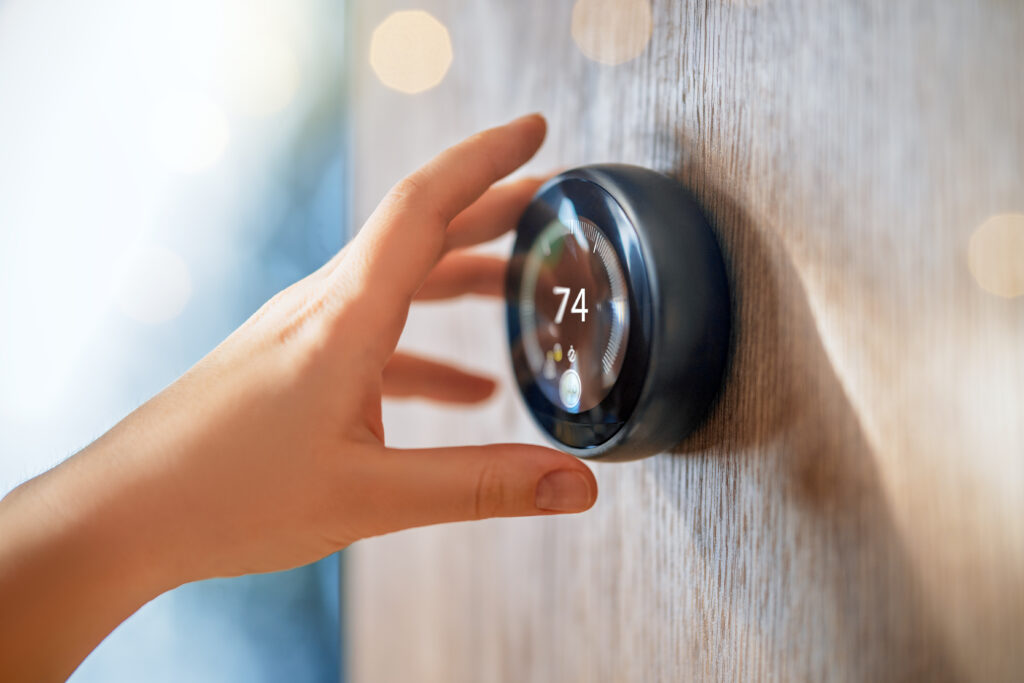
In large, multi story, or architecturally complex homes, a single thermostat will almost certainly fail to deliver even comfort. Hot air naturally rises, so the second floor will always be significantly warmer than the first floor or the basement. In these cases, a sophisticated solution is required: an HVAC zoning system. Zoning divides the home into two or more distinct areas, each controlled by its own thermostat and using automatic dampers installed in the ductwork. This allows you to direct heat precisely where it is needed. For example, the basement can call for heat without overheating the upstairs bedrooms. Zoning systems maximize both comfort and energy efficiency, eliminating the struggle to balance temperature across different levels of the home.
Uneven heating is a complex problem, but it is one that can always be solved. It requires a systematic approach that addresses everything from the simplest task, like changing a clogged filter, to the most complex, like correcting poorly designed ductwork or sealing the building envelope. Whether the culprit is a failure in the heating equipment, a flaw in the home’s structure, or a mistake in the original system sizing, the solution is rooted in professional diagnosis.
Do not continue to waste money and sacrifice comfort by living with frustrating hot and cold spots. At Barney’s Heating and Air, we specialize in comprehensive home comfort solutions for our neighbors in Clarksville, TN. Our technicians have the training and specialized tools to perform detailed inspections that go beyond simple equipment repair. We can diagnose airflow issues, check for duct leakage, and determine if your system is properly sized for your unique home.